Book Appointment Now

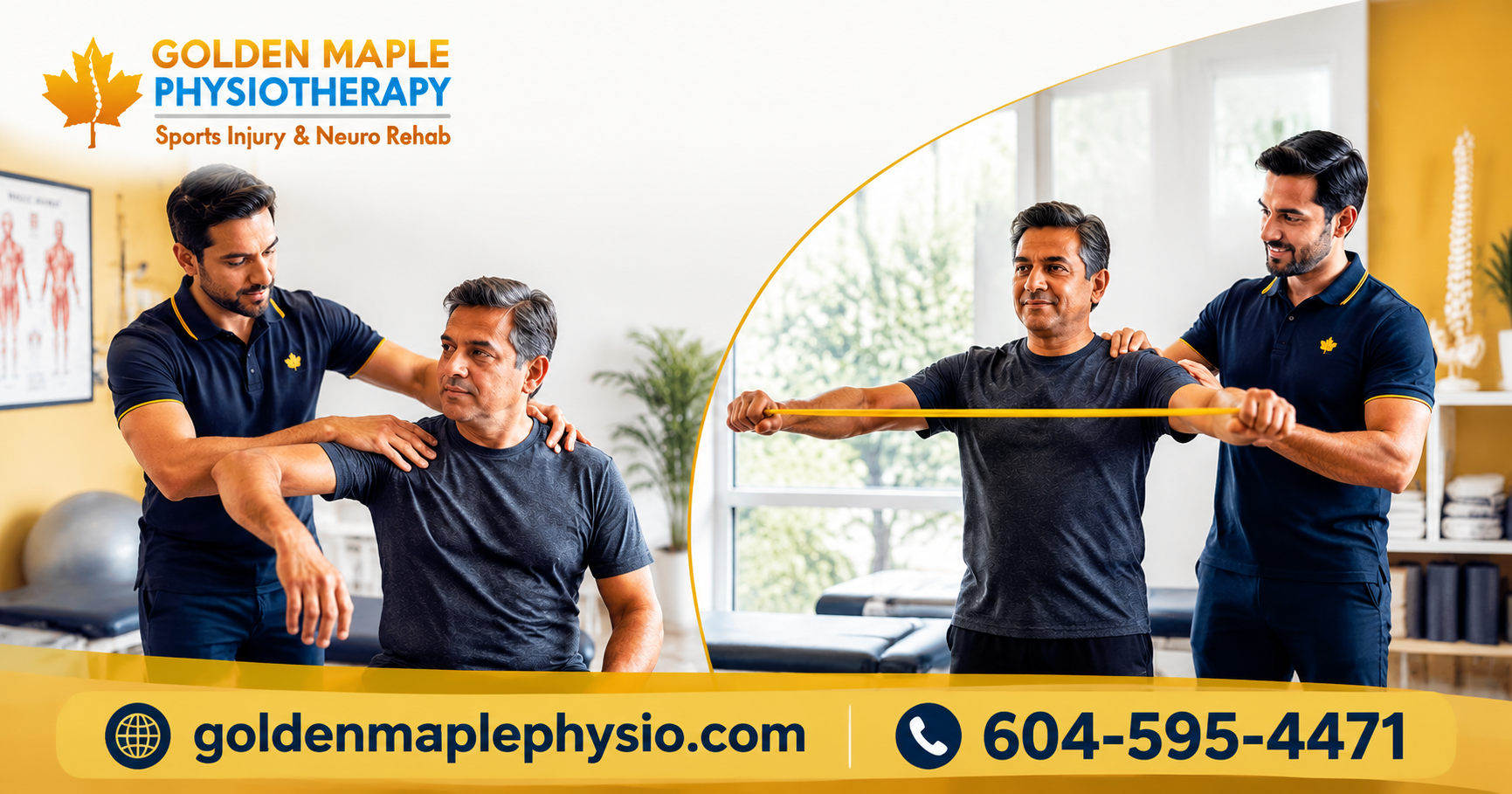
Manual Therapy vs Exercise Therapy: Which One Do You Need?
- On
- InUncategorized
If you’re dealing with muscle pain, joint stiffness, or recovering from an injury, you’ve probably heard about two common physiotherapy treatments — manual therapy and exercise therapy. But which one is right for you?
That’s exactly what this guide answers. We’ll break down manual therapy vs exercise therapy in simple terms — what each treatment involves, how they differ, their benefits, and how to choose the right one for your recovery.
By the end, you’ll know exactly which physiotherapy treatment fits your condition — and how our physiotherapists in Maple Ridge can help you get started.
What Is Manual Therapy?
Manual therapy is a hands-on physiotherapy technique. Your physiotherapist uses their hands to move, stretch, and apply pressure to your muscles and joints — no machines, no equipment.
The goal is simple: relieve pain, improve mobility, and restore normal muscle function.
Common Manual Therapy Techniques
- Joint mobilization – Gentle, controlled movements to loosen stiff joints
- Soft tissue massage – Releases muscle tension and improves blood flow
- Joint manipulation – Quick, precise movements to restore joint motion
- Myofascial release – Targets tight connective tissue around muscles
- Trigger point therapy – Releases painful muscle knots
Who Is Manual Therapy Best For?
Manual therapy works well if you have:
- Acute neck or back pain
- Stiff or frozen joints (like frozen shoulder)
- Muscle tension and tightness
- Headaches caused by neck problems
- Limited range of motion after an injury
What Is Exercise Therapy?
Exercise therapy (also called therapeutic exercise or exercise-based rehabilitation) uses specific, guided movements to strengthen muscles, improve flexibility, and restore function.
Unlike a regular gym workout, these exercises are prescribed by a physiotherapist and tailored to your condition, fitness level, and recovery goals.
Common Types of Therapeutic Exercises
- Strengthening exercises – Build muscle support around injured joints
- Stretching exercises – Improve flexibility and reduce stiffness
- Range-of-motion exercises – Restore normal joint movement
- Balance and stability training – Prevent falls and re-injury
- Postural exercises – Correct alignment issues from desk work
Who Is Exercise Therapy Best For?
Exercise therapy is ideal if you have:
- Chronic pain (lasting more than 3 months)
- Weakness after surgery or injury
- Recurring sports injuries
- Arthritis or joint degeneration
- Poor posture from prolonged sitting
Manual Therapy vs Exercise Therapy: Key Differences
Here’s a quick side-by-side comparison to help you understand the difference between manual therapy and exercise therapy:
Feature | Manual Therapy | Exercise Therapy |
Approach | Hands-on treatment by a physiotherapist | Active movements performed by you |
Who does the work | The therapist | The patient (with guidance) |
Best for | Acute pain, stiffness, limited mobility | Chronic pain, weakness, long-term recovery |
Results | Quick, short-term pain relief | Gradual, long-lasting improvement |
Session style | Passive — you relax while the therapist works | Active — you perform guided exercises |
Ongoing role | Done in-clinic | Continues at home between sessions |
In short: Manual therapy gives you faster pain relief, while exercise therapy builds lasting strength and prevents the problem from coming back.
Benefits of Manual Therapy
- Immediate pain relief – Hands-on techniques calm irritated tissues quickly
- Improved joint mobility – Mobilization loosens stiff joints so you move freely
- Reduced muscle tension – Soft tissue work releases tightness and knots
- Better blood circulation – Speeds up natural healing
- Reduced reliance on pain medication – A drug-free pain relief technique
Benefits of Exercise Therapy
- Long-term recovery – Strengthens the root cause, not just the symptoms
- Injury prevention – Stronger muscles protect your joints from re-injury
- Improved function – Helps you return to work, sports, and daily activities
- Better posture and balance – Especially helpful for desk workers and seniors
- You stay in control – Home exercise programs keep your recovery going between visits
So, Which One Do You Need?
The honest answer: it depends on your condition and stage of recovery. Here’s a simple guide:
Choose Manual Therapy First If…
- Your pain is new or severe (acute)
- Your joints feel stiff or locked
- You can’t move well enough to exercise yet
- You need fast relief to get through daily activities
Choose Exercise Therapy If…
- Your pain is chronic or keeps returning
- You feel weak after surgery or injury
- You want to prevent future injuries
- Your goal is returning to sports or an active lifestyle
The Best Answer for Most People? Both.
Research and clinical experience show that combining manual therapy with exercise therapy delivers the best results. Here’s why:
- Manual therapy reduces pain first — making movement possible
- Exercise therapy builds strength next — making results last
Think of it this way: manual therapy opens the door, and exercise therapy keeps it open.
At Golden Maple Physiotherapy, our treatment plans often blend both approaches — along with advanced options like IMS/dry needling and shockwave therapy — depending on what your body needs.
What to Expect at Your First Physiotherapy Session
Not sure where to start? You don’t have to decide alone. Here’s how it works at our Maple Ridge clinic:
- Assessment – A one-to-one evaluation of your pain, movement, and history
- Diagnosis – We identify the root cause of your musculoskeletal pain
- Personalized plan – A rehabilitation program combining the right mix of manual therapy and therapeutic exercises
- Ongoing support – Progress tracking, home exercise guidance, and plan adjustments
Every session happens in a private treatment room, with direct billing to most insurance companies.
FAQ
Is manual therapy better than exercise therapy?
Neither is “better” — they serve different purposes. Manual therapy provides faster short-term pain relief, while exercise therapy delivers stronger long-term results. Most patients recover best with a combination of both.
Can manual therapy and exercise therapy be done together?
Yes. In fact, combining both is the most effective approach for most conditions. Manual therapy reduces pain and stiffness first, which makes therapeutic exercises easier and more effective.
How many physiotherapy sessions will I need?
It varies by condition. Acute injuries may improve in 4–6 sessions, while chronic conditions or post-surgical rehabilitation may take 8–12 weeks. Your physiotherapist will give you a clear timeline after your first assessment.
Does manual therapy hurt?
Most techniques feel like a firm massage or gentle stretching. Some soreness for 24–48 hours after treatment is normal — similar to how you feel after a good workout.
Do I need a doctor's referral for physiotherapy in BC?
No. In British Columbia, you can book directly with a physiotherapist without a referral. However, some insurance plans may require one for reimbursement — check with your provider.
Ready to Find the Right Treatment for Your Pain?
You don’t have to figure out manual therapy vs exercise therapy on your own. Our experienced physiotherapists — with 18+ years of experience in Maple Ridge — will assess your condition and build a personalized treatment plan that gets you moving pain-free again.
✅ One-to-one appointments | ✅ Private treatment rooms | ✅ Direct insurance billing | ✅ Early morning & late evening slots available
📞 Call us today: 604-595-4471 📍 Visit us: 23230 124 Avenue, Maple Ridge, BC 🗓️ Book Your Appointment Now →
Also serving Langley at Divine Care Physiotherapy — 604-401-2946
For more details :
goldenmaple physiotherapy
goldenmaplephysio.com
604-595-4471
Newsletter Updates
Enter your email address below and subscribe to our newsletter